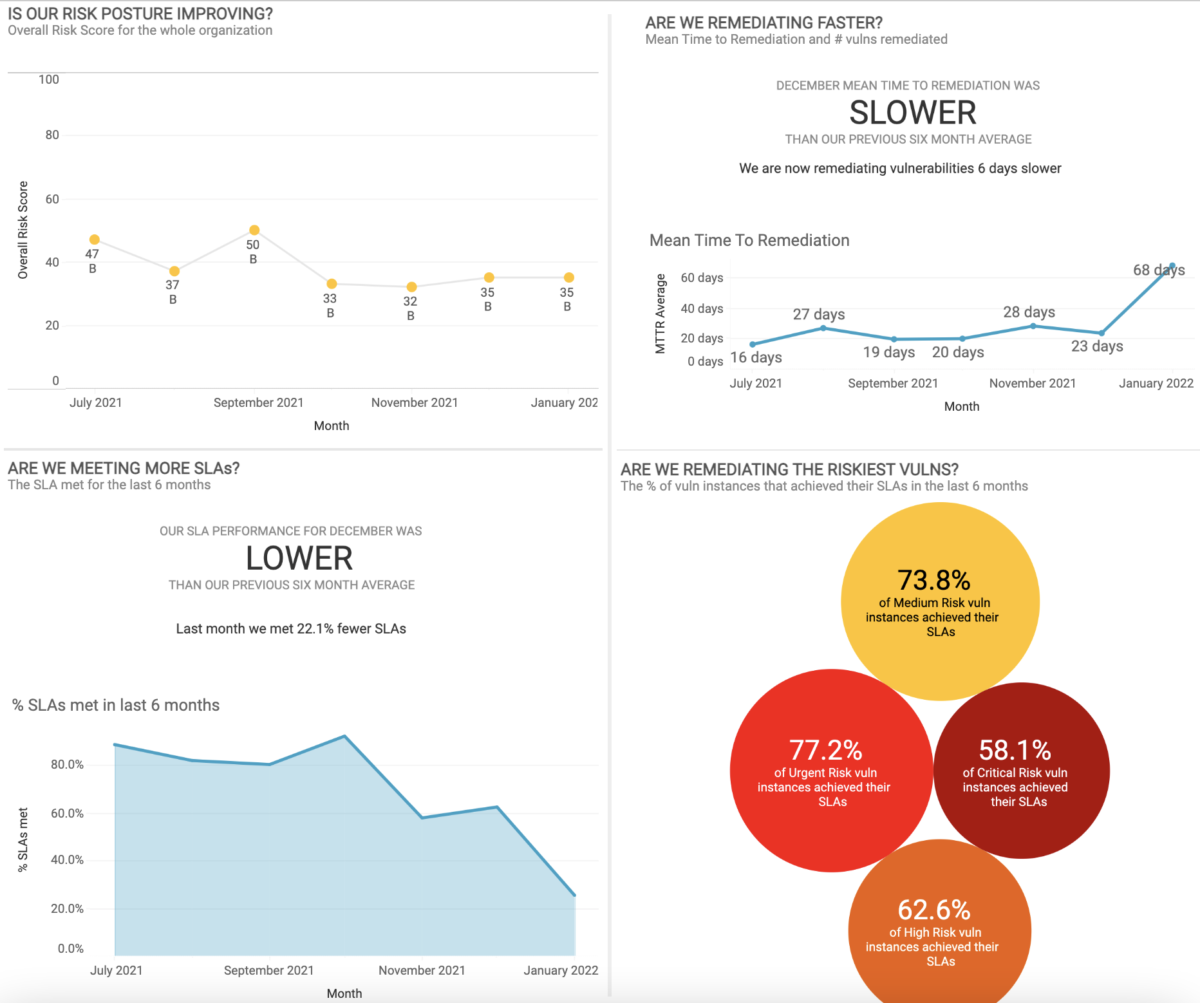
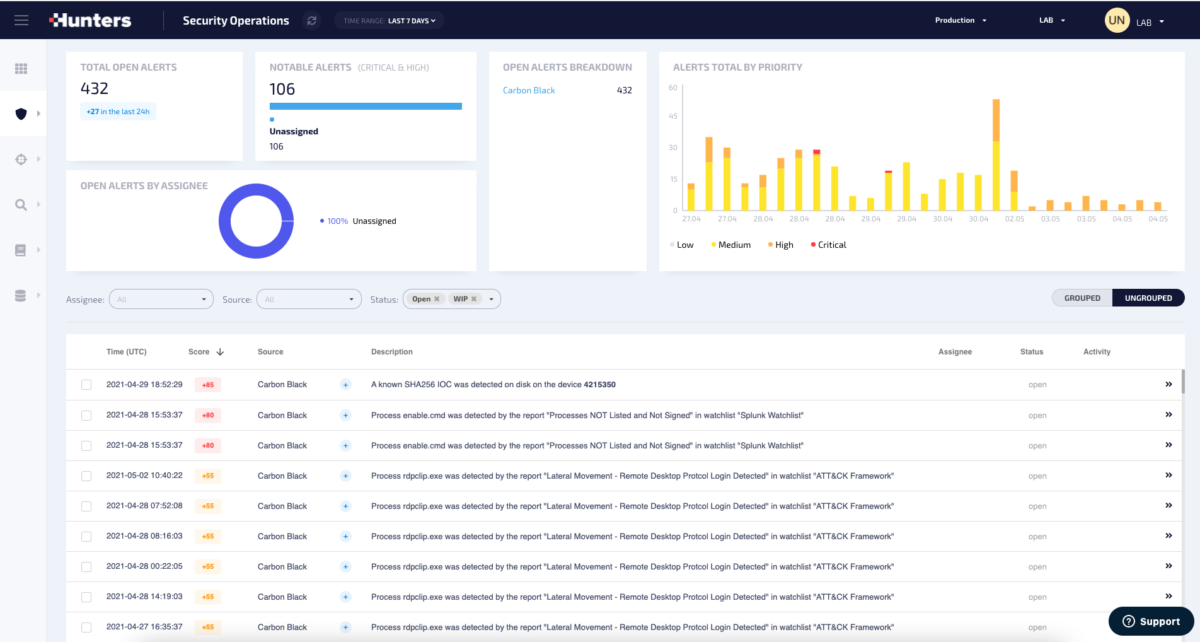
NopSec’s UVRM (Vulnerability Risk Management) is an innovative vulnerability risk management solution designed to combine better prioritization, remediation of security vulnerabilities, and security-program health reporting into a single platform. Focusing on the pillar of security program reporting, UVRM platform pulls data inputs from a wide breadth of single-point security platforms into an aggregated reporting console. Data from infrastructure scanners, web application scanners, cloud scanners, threat intelligence software, and endpoint protection platforms are normalized for vulnerability management teams to provide comprehensive performance reporting and ROI validation of security investment. With these combined inputs, UVRM is able to track and report in real-time on critical security KPIs such as MTTR, SLA Policy Compliance, and many more. These metrics can be further sliced by individual business line and asset classification allowing for more granular analysis into specifics segments of an organization to pin point problems. Furthermore, UVRM is capable of integrating and pushing data to tools like Microsoft Power Bi and Tableau to further scale and integrate with analytics platforms used across organizations. The end result of this functionality is a unified single-pane security analytics platform that brings cybersecurity insights into the spotlight and out of the dark.
How we are different
The NopSec UVRM platform is the only vulnerability prioritization tool on the market that provides transparency into its proprietary machine-learning prioritization algorithm by displaying analytics on the top 5 factors that both raise and reduce a vulnerability's risk rating.
NopSec's UVRM security analytics are presented in a language and format that allows the entire organization (c-suites to associates) to understand the state of the company's vulnerability management, not just the IT and technical teams that live the numbers every day.
NopSec's UVRM deep integration capabilities enable security teams to combine and report on the comprehensive health of the entire cybersecurity organization in real-time from one platform, rather than doing so in each of the many point solutions security teams employ.
About this category: Security Analytics
The Cybersecurity Excellence Awards recognize security analytics products that find threats and patterns in security data. The category covers large-scale analytics, often over a data lake, that finds what rule-based tools miss.
An independent jury of security practitioners, analysts and CISOs scores each nomination on leadership, innovation and impact. Each nomination competes in its category against organizations of similar size and region. Entry packages, sponsorship and public votes do not affect the jury's scores.
Community Choice voting for the 2022 season closed on July 10, 2022.
What is the Community Choice Award?
A separate award decided by public vote, independent of the jury awards. Each completed share of a profile on LinkedIn, Facebook or X counted as one vote.
2027 award season
Nominations closeFebruary 27, 2027
Jury winners announcedWeek of March 22
Community Choice voting closesJuly 10, 2027
Nominate in this category
Enter a nomination in Security Analytics. Review takes about one business day.
Help This Nominee Win a Community Choice Award Vote by sharing this page:
6
Community
Votes
Cast your vote by sharing this nominee’s profile on LinkedIn, Facebook, or X, using the buttons above. Each completed social share adds one Community Choice vote.
Votes cast by July 10, 2027 will determine the Community Choice winners (independent of the jury awards). Winners will be announced before Black Hat USA.
What is the Community Choice Award? →
Community Choice is a separate award track from the jury-selected Cybersecurity Excellence Awards. Jury winners are chosen by expert judges, while Community Choice winners are determined by public voting. A nominee may be honored by the jury, the community, or both.
2022 winners in Security Analytics
To keep judging fair, each entry is judged against peers in its segment, so a category can have more than one Gold winner.